
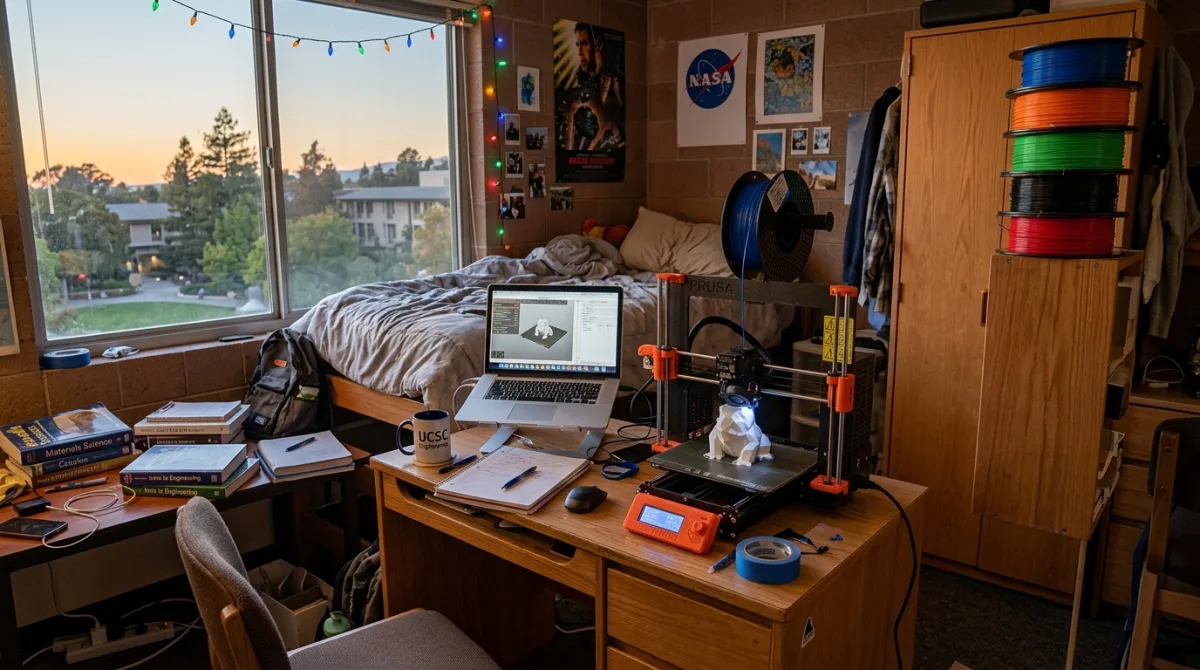
Every product starts as an idea, then becomes a sketch and a CAD model. But no matter how good the model looks on screen, the real test begins when you hold the part in your hand. Does it fit the housing? Is the button comfortable to press? Does the bracket line up with the mounting holes? Rapid prototyping answers these questions quickly and cheaply. Drukuje3D helps designers, engineers, startups and inventors turn their digital models into physical prototypes within days instead of weeks.
FDM 3D printing is one of the most cost-effective prototyping methods available. It does not require moulds or tooling, so changing the design between iterations costs almost nothing beyond the printing itself.
Why prototype with 3D printing?
- fast verification of shape, size and ergonomics,
- checking fit with existing components and assemblies,
- cheap iterations – each version is a new file, not a new mould,
- physical samples for investors, clients and team members,
- early detection of design errors before expensive production,
- functional testing of mounts, clips and enclosures.
How Drukuje3D supports prototyping
Send your model in STEP, STL, 3MF or OBJ format along with information on what you want to test. Drukuje3D will propose the material, orientation and layer height that best suit the purpose. A visual prototype for a presentation needs a smooth surface, while a functional prototype needs strength in the right direction. The quote usually arrives on the same working day, and production typically takes a few working days after approval.
Test sections for critical areas
One of the most practical services Drukuje3D offers is printing only the critical fragment of a larger part. If you are unsure about a snap-fit, a thread or a mounting interface, there is no need to print the whole housing. A small test section is faster and cheaper, and it shows immediately whether the clearances are correct. Once the fit is confirmed, the full part can be printed with confidence.
Materials for prototypes
PLA is perfect for visual and dimensional prototypes thanks to its accuracy and ease of printing. PETG is better for functional prototypes that need some flexibility and toughness. ABS works for parts exposed to higher temperatures or meant to be sanded and painted for presentation. TPU allows testing of flexible elements like seals and grips. Details of the materials and the ordering process are available at https://drukuje3d.com/en/3d-printing-service/.
Design tips for FDM prototypes
Design walls that are not too thin, avoid large unsupported overhangs where possible, and leave reasonable clearances between mating parts – typically a few tenths of a millimetre. If your design is larger than the printer’s build area, Drukuje3D can split it into segments that are joined after printing.
Confidentiality
Prototypes often involve unreleased products. Drukuje3D uses customer files only to complete the order and does not share them. If needed, a non-disclosure agreement can be signed before work begins.
From prototype to short run
When the prototype is approved, the same workshop can produce a short series of parts for a pilot, a crowdfunding campaign or early customers. This continuity saves time, because the print settings are already tested.
Summary
Rapid prototyping with Drukuje3D lets you validate a design quickly, iterate cheaply and present real samples instead of renders. Send your model, get advice on materials and settings, and hold your idea in your hands within days.